PART 3: THE LETTER RENEE WAS NEVER SUPPOSED TO FIND
Patricia Holloway closed the folder with both hands, slow enough for me to understand that what she was about to say was not legal advice anymore.
It was a warning.
“Mrs. Whitaker,” she said, using the name Harold had given me for forty-seven years, “your money is protected. Your house is protected. Your trust is protected. But people who feel entitled to something they cannot reach often stop asking politely.”
I looked at the stack of papers between us.
Trust documents.
Property transfers.
Beneficiary changes.
Medical directives.
Every document was neat.
Every signature was mine.
Every line built a wall around the life I had finally reclaimed.
Still, my stomach tightened.
“You think Daniel will try something?” I asked.
Patricia did not answer immediately.
That was answer enough.
“I think grief makes people vulnerable,” she said. “And money makes other people creative.”
Creative.
That was such a clean word for such an ugly thing.
I thought of Renee’s white roses sitting on my porch before I gave them away. I thought of Daniel standing with coffee in his hand, apologizing with one foot in shame and the other in fear. I thought of my grandchildren lowering their voices every time their mother’s name came up, as if Renee were a storm system moving somewhere nearby.
“I don’t want to fight my son,” I said.
Patricia’s expression softened.
“Then don’t,” she replied. “But don’t hand him the knife because you love him.”
That sentence stayed with me all the way home.
The desert sun was already sliding low when I pulled into my driveway. My house glowed in the warm evening light, the porch swing barely moving in the breeze, the little American flag by the mailbox flicking softly as if it were trying to wave me in.
For the first time in years, I did not dread opening my own front door.
I carried the folder inside, placed it on the kitchen table, and made tea in Harold’s old kettle.
The whistle rose slowly.
Thin at first.
Then strong.
Then loud enough to fill the whole house.
I stood there and let it scream.
There had been too many years when I had swallowed every sound before it could become an inconvenience.
That evening, I did not swallow anything.
I poured the tea.
Set Harold’s cup across from mine.
And then I opened the final envelope Patricia had given me.
It was not for Daniel.
Not for Renee.
Not even for my grandchildren.
It was for me.
On the front, in Patricia’s steady handwriting, were five words:
READ THIS BEFORE YOU FORGIVE.
I almost laughed.
Not because it was funny.
Because forgiveness had always been the word people handed women when they wanted them to sit back down.
Forgive him.
He’s your son.
Forgive her.
She’s stressed.
Forgive them.
They didn’t mean it.
Forgive and move on.
Nobody ever asked what forgiveness cost when the person paying was already empty.
I opened the envelope with a butter knife.
Inside was a copy of a document I had signed two weeks earlier, but Patricia had marked one section in yellow.
It was the clause that gave my trustee — not Daniel — full authority over my estate if I became medically incapacitated.
I stared at the line.
Then I stared longer.
Because beneath it, Patricia had written a note.
Your son asked about this before you did.
My hand went cold around the paper.
I read it again.
Not Daniel might ask someday.
Not Daniel should know.
Daniel had already asked.
I sat down slowly.
The chair legs made a soft sound against the floorboards.
My tea cooled beside me.
Outside, a car passed.
Somewhere down the street, a dog barked twice.
Inside my kitchen, everything became very still.
Daniel had not asked me if I was happy.
He had not asked if I needed anything.
He had not asked whether the house felt too quiet or if I missed Harold at night so badly that sometimes I still reached across the bed before remembering.
He had asked Patricia about control.
I folded the note once.
Then again.
Not because I wanted to hide it.
Because if I kept looking at it, my heart might do something foolish, like make excuses.
The phone rang at 7:06 p.m.
Daniel.
I let it ring.
Then it stopped.
Then a text came through.
Mom, can we come by tomorrow? Renee wants to apologize properly.
I looked at the message until the screen dimmed.
Renee wanted to apologize properly.
There are apologies that arrive from sorrow.
There are apologies that arrive from strategy.
I had lived long enough to know the difference, but I had also loved long enough to hope I was wrong.
The next afternoon, Daniel arrived with Renee and the children.
Renee brought a pie.
Apple.
Store-bought, but transferred into one of her ceramic dishes so it looked homemade.
I knew because the crust had the perfect machine-made ridges and because Renee had never baked anything in her life that did not come with instructions printed on the box.
Still, I thanked her.
That was how I had survived in their house.
Manners first.
Truth later.
My grandson hugged me longer than usual.
My granddaughter slipped her hand into mine and whispered, “I like your house, Grandma.”
I squeezed her fingers.
“It likes you too.”
Renee smiled at that, but the smile did not reach her eyes.
She walked through my front hall slowly, taking inventory.
The original hardwood.
The built-in shelves.
The sunroom.
The kitchen windows.
The porch.
Her gaze landed on each beautiful thing with the same expression she used to have when she saw a dress in a store window that cost too much but not enough to make her stop wanting it.
Daniel noticed.
His jaw tightened.
For once, I let him notice without helping him feel better.
We sat in the sunroom.
I served tea.
Renee placed the pie in the center of the table as if she were presenting evidence.
Then she inhaled, pressed her hands together, and began.
“Margaret, I owe you an apology.”
Not Mom.
Not Grandma.
Margaret.
Formal names are useful when people want distance from what they did.
“I was overwhelmed,” she continued. “Having another adult in the house was harder than I expected. I handled it badly.”
Badly.
She had called me a utility cost.
She had watched my son humiliate me at dinner.
She had corrected me when I called the spare bedroom my room.
She had treated my grief like clutter.
But she had handled it badly.
Daniel looked down at his cup.
My grandson’s face went red.
My granddaughter stared at the pie.
I waited.
Renee kept going.
“I think there were misunderstandings on both sides.”
There it was.
The bridge people build when they want you to walk halfway toward your own mistreatment.
I set my cup down.
“Which side misunderstood what?” I asked.
Renee blinked.
Daniel looked up.
The children froze.
I had not raised my voice.
That made it worse.
Renee’s mouth opened slightly, then closed.
“Well,” she said carefully, “I think perhaps you felt excluded when we didn’t mean—”
“You didn’t invite me to family brunches.”
Her face tightened.
“That wasn’t intentional.”
“You took family photos without me.”
“That was just—”
“You told my son I ate your food and used your utilities.”
The room changed.
Not loudly.
Just enough for the air to lose its softness.
Daniel closed his eyes.
Renee went pale around the mouth.
My granddaughter whispered, “Mom?”
Renee turned sharply toward her.
“It was taken out of context.”
I smiled then.
A small, tired smile.
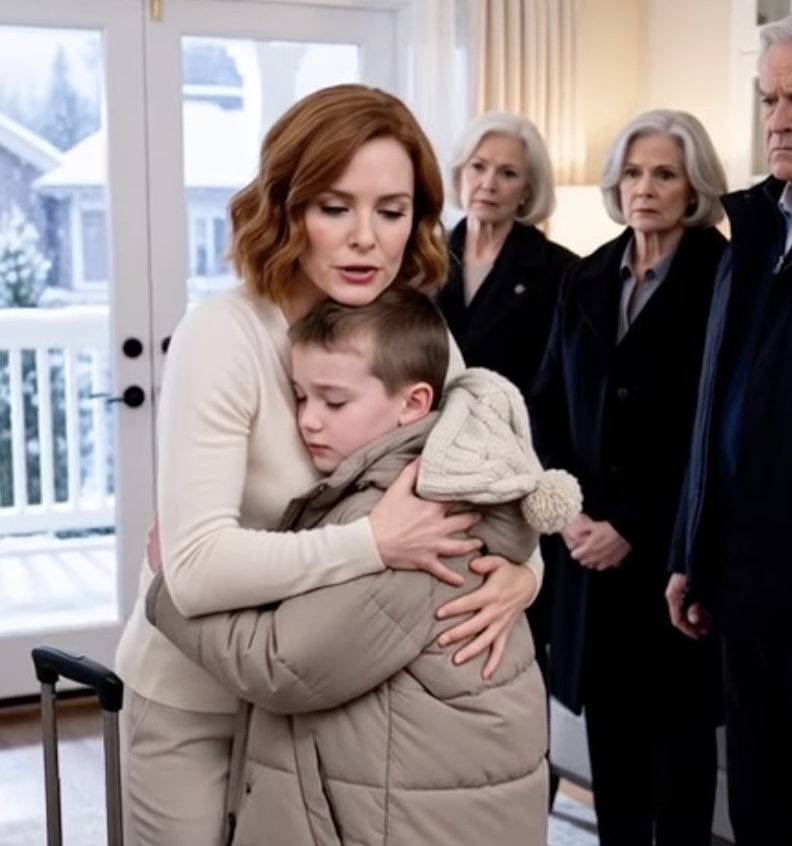
“Renee, I was standing in the hallway.”
Daniel rubbed his forehead.
Nobody spoke.
Outside, sunlight moved across the floorboards, warm and bright and completely uninterested in our shame.
Renee’s eyes filled suddenly.
I did not know whether the tears were real.
That was the tragedy.
Once trust is broken badly enough, even pain starts looking like performance.
“I’m sorry,” she whispered.
This time, the words were smaller.
Closer to human.
But Patricia’s note burned in my memory.
Your son asked about this before you did.
I turned to Daniel.
“Did you ask Patricia what would happen to my estate if I became incapacitated?”
His head snapped up.
Renee went perfectly still.
My grandson looked from his father to me.
Daniel’s face emptied.
That is the only word for it.
Emptied.
Like every excuse had fled at once.
“Mom,” he said.
One word.
No answer inside it.
I waited.
He swallowed.
“I was just trying to understand.”
“Understand what?”
“The process.”
“What process?”
His eyes flicked toward Renee.
There it was.
Small.
Fast.
But I saw it.
So did the children.
Renee’s hand curled around the edge of the table.
Daniel leaned forward.
“Mom, please don’t make this sound worse than it was.”
“I’m asking what you wanted to understand.”
He exhaled.
“You’re seventy-one. You live alone now. You have a large estate. I was concerned.”
“Concerned before or after you knew about the money?”
Silence.
That one landed where truth lives.
My granddaughter began crying quietly.
My grandson stood up so fast his chair scraped backward.
“Dad,” he said, voice shaking, “what is wrong with you?”
Daniel flinched as if his own son had slapped him.
Renee snapped, “Sit down.”
“No,” he said.
It was the first time I had ever heard him speak to his mother like that.
He looked seventeen and grown at the same time.
“You both treated Grandma like garbage. And now you’re sitting in her house pretending this is about concern?”
Renee’s face hardened.
“Enough.”
But he was not finished.
“No. It’s not enough. It was never enough. You made us pretend not to see it.”
That sentence broke something open.
My granddaughter covered her mouth and sobbed.
Daniel looked at his children like he had never seen them before.
Maybe he hadn’t.
Maybe parents sometimes become so busy managing appearances that they forget children are witnesses, not furniture.
Renee stood.
Her chair pushed back with a sharp wooden scream.
“This is ridiculous,” she said. “We came here to apologize, and we’re being attacked.”
“No,” I said.
Everyone looked at me.
I stood slowly, both palms resting on the table.
“You came here to soften me.”
Renee’s eyes flashed.
Daniel whispered, “Mom…”
I looked at him.
Really looked at him.
At the boy who once slept with a plastic dinosaur under his pillow.
At the teenager who cried when Harold taught him to change a tire.
At the man who stood silent while his wife made me small.
At the son who had asked an attorney how close he could get to the walls around my life.
“I love you,” I said. “But I am not confused anymore.”
Renee grabbed her purse.
Daniel did not move.
The children did not move either.
That was the moment Renee understood something had shifted beyond her reach.
She could still command a room.
But not this one.
Not mine.
She turned toward the door.
“Come on,” she said to the children.
My grandson shook his head.
“I’m staying.”
Renee froze.
My granddaughter wiped her face and whispered, “Me too.”
Daniel stood then.
“Kids, don’t—”
“No,” my grandson said. “You don’t get to tell us what respect looks like anymore.”
Renee stared at him as if he had become a stranger.
Maybe honesty makes children unrecognizable to parents who raised them around lies.
The next few seconds happened slowly.
Renee walked to the front door alone.
Daniel followed halfway, stopped, turned back toward me, and looked like a man standing between two burning houses.
“Mom,” he said, “I didn’t know she called Patricia.”
My skin went cold.
Not asked.
Called.
The word slipped out of him before he could catch it.
Renee stopped at the doorway.
Her back went rigid.
The children turned.
I stared at my son.
“What did you say?”
Daniel’s face went white.
Renee spun around.
“Daniel.”
One word.
A warning.
But it was too late.
The truth was already in the room, standing beside us, breathing.
I picked up Patricia’s envelope from the side table and held it in my hand.
“Renee called Patricia?”
Daniel looked at his wife.
Then at me.
Then at the floor.
My granddaughter whispered, “Mom, what did you do?”
Renee’s mouth opened, but no sound came out.
For the first time since I had known her, she had no polished sentence ready.
No social smile.
No graceful angle.
No clean version of herself to present.
Just fear.
Real fear.
The kind people only show when a locked door opens from the wrong side.
Then my phone rang.
Patricia Holloway’s name appeared on the screen.
I answered without taking my eyes off Renee.
Patricia did not say hello.
Her voice was calm, but beneath it was steel.
“Margaret,” she said, “do not let anyone leave your house with your mail.”
I turned toward the entry table.
The brass bowl was empty.
The letter from the trust company was gone.
And Renee’s purse was already closed.