PART 4: THE PURSE ON THE FLOOR
For one second, nobody moved.
Not Daniel.
Not the children.
Not Renee.
Not me.
The whole house seemed to hold its breath around that missing letter.
Then Patricia’s voice came through the phone again, lower this time.
“Margaret, listen carefully. The trust company mailed a confirmation packet to your residence yesterday. It contains account routing information, property transfer details, and a copy of your trustee authorization. If someone has taken it, do not argue. Do not touch them. Call the police.”
Renee’s fingers tightened around her purse.
Daniel turned toward her slowly.
“Renee,” he said, and for once there was no softness in his voice. “Open your purse.”
Her face changed.
It was not fear anymore.
It was outrage dressed as dignity.
“How dare you?” she said.
My grandson stepped between her and the front door.
He did not touch her.
He just stood there, tall and trembling, blocking the way a child should never have to block his own mother.
“Open it,” he said.
Renee looked at him like he had betrayed her.
But betrayal is a strange word.
People use it when the truth stops serving them.
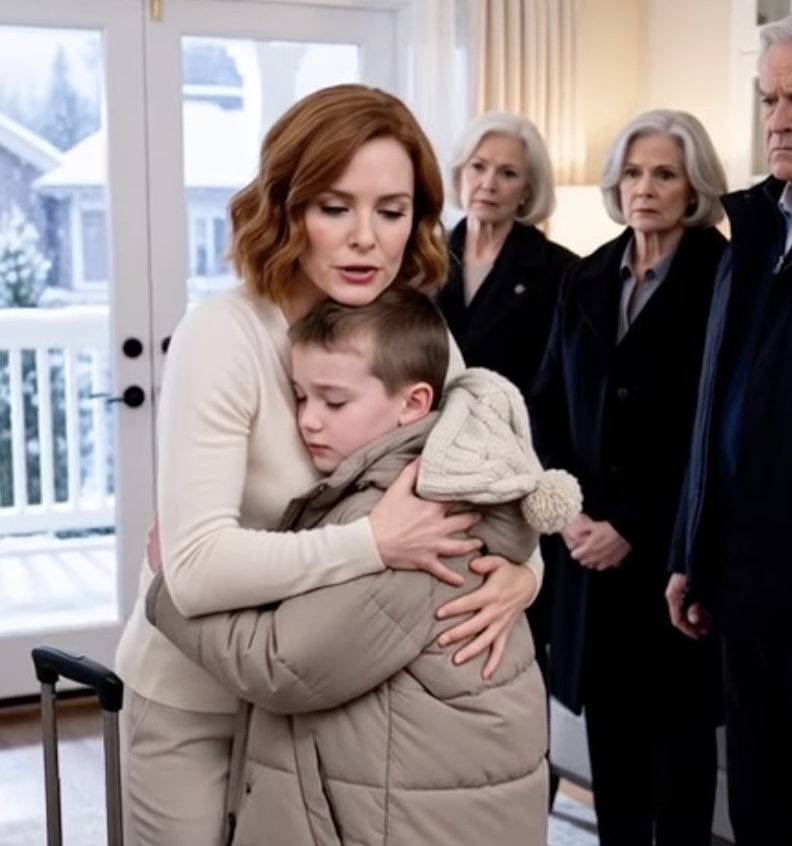
My granddaughter began crying harder.
“Mom, please,” she whispered. “Just open it.”
Renee’s lips pressed into a thin white line.
Then she laughed once.
A sharp, ugly sound.
“This is insane,” she said. “All of you have lost your minds over an old woman’s paranoia.”
Old woman.
There it was.
Not Margaret.
Not Grandma.
Not family.
Old woman.
Daniel heard it too.
I saw it hit him.
Not as a surprise.
As proof.
He reached for the purse.
Renee jerked back.
“Don’t you dare.”
“Then open it yourself,” he said.
The room went silent again.
Outside, the porch swing creaked in the dry breeze.
Inside, my tea sat untouched, the pie Renee had brought still perfectly centered on the table, shining under the sunroom light like a lie with cinnamon on top.
Renee looked at each of us.
Daniel.
Her son.
Her daughter.
Me.
And finally, she did the only thing left.
She threw the purse onto the floor.
It landed hard.
The clasp sprang open.
Lipstick rolled out first.
Then keys.
A compact mirror.
A folded grocery receipt.
A bottle of perfume.
And beneath all of it, a thick cream envelope with my name printed across the front.
Margaret Whitaker.
My granddaughter made a sound that was almost a gasp and almost a sob.
Daniel bent down slowly and picked it up.
His hands were shaking.
Not a little.
Not from anger.
From finally seeing how far the woman beside him had been willing to go.
He turned the envelope over.
The seal had been opened.
Not torn.
Opened carefully.
Like someone had used steam.
Like someone had done it before.
“Renee,” he whispered.
She lifted her chin.
“I was protecting our family.”
Our family.
Two words that had never included me until there was money attached.
I took the envelope from Daniel’s hand.
Patricia was still on the line.
“She opened it,” I said.
Patricia exhaled once.
“Put the phone on speaker.”
I did.
Her voice filled the room, calm and sharp enough to cut glass.
“Mrs. Briggs, this is Patricia Holloway, attorney for Margaret Whitaker and the Whitaker Family Trust. Do not remove any documents from that residence. Do not copy them. Do not photograph them. Do not contact any financial institution listed in that packet. If you have already done any of those things, I strongly recommend you retain counsel.”
Renee’s face flushed.
“You don’t scare me.”
“No,” Patricia said. “Paper does.”
That was the first time I nearly smiled.
Daniel looked at his wife.
“Did you take pictures?”
Renee said nothing.
“Did you?” he asked louder.
My grandson looked down at her phone, lying beside the purse.
Renee moved first.
So did he.
He grabbed the phone before she could.
“Give that back,” she snapped.
“No,” he said, voice shaking. “Not until Grandma’s lawyer says what to do.”
Renee lunged.
Daniel caught her wrist.
Not hard.
But firmly.
The sound that came from her then was pure disbelief.
As if she had spent so many years moving everyone around like furniture that she could not imagine the furniture refusing.
“Daniel,” she hissed, “you’re choosing her over your wife?”
Daniel looked at me.
Then at his children.
Then at the envelope in my hand.
“No,” he said quietly. “I’m choosing the truth over theft.”
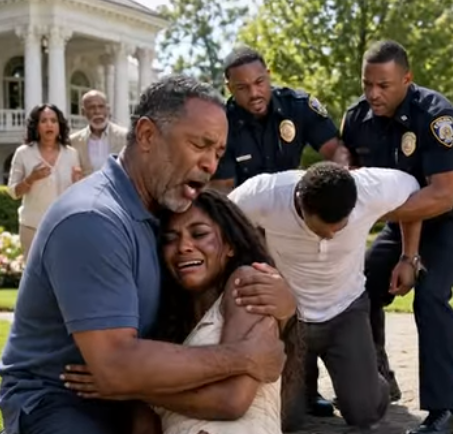
Renee slapped him.
The sound cracked through the sunroom.
My granddaughter screamed.
My grandson froze.
Daniel’s head turned with the force of it, but he did not raise a hand back.
He just stood there, one cheek red, eyes wet, looking at the woman he had defended too many times.
That slap did something no apology could have done.
It ended the performance.
Renee grabbed her purse from the floor, leaving the phone behind, and stormed toward the door.
This time, nobody stopped her.
Not because she had won.
Because there are some exits people should make in full view.
She opened the door so hard it hit the wall.
Then she turned back, her face twisted with humiliation.
“You think this makes you powerful?” she said to me. “You’re still alone.”
The words landed.
Of course they did.
Cruel people are skilled at finding the old bruise.
For a second, I saw the guest room again.
The folded towels.
The sticky note by the coffee maker.
The family photo without me.
The dinner table where my son asked when I was finally going to move out.
Then my granddaughter stepped beside me and took my hand.
My grandson stood on my other side.
Daniel remained by the table, broken and ashamed, but present.
Not perfect.
Not forgiven.
But present.
I looked at Renee.
“No,” I said. “I was alone in your house. I am at peace in mine.”
Her face flickered.
Then she left.
The door slammed behind her.
For a long time, nobody spoke.
Patricia finally broke the silence.
“Margaret, I need Daniel to read me the phone’s lock screen. Do not open anything yet.”
Daniel picked up Renee’s phone with two fingers, like it was something dirty.
The screen lit up.
There were missed calls.
Texts.
And one notification from an email app.
The subject line was visible.
Re: Whitaker Trust Documents — Urgent Review
Daniel’s face drained.
He read it aloud.
Patricia went quiet.
Then she said, “Who is the sender?”
Daniel swallowed.
“Martin Voss.”
Patricia’s tone changed.
Not louder.
Worse.
Sharper.
“Put the phone down. Do not touch another button.”
I gripped the back of the chair.
“Who is Martin Voss?”
Daniel closed his eyes.
Nobody answered.
So I asked again.
“Daniel. Who is Martin Voss?”
My son looked at me then, and for the first time since Harold died, I saw the little boy who used to confess before punishment because the guilt hurt him worse than the consequence.
“He’s a financial planner,” Daniel said.
I waited.
His voice cracked.
“Renee hired him.”
My knees weakened.
My grandson helped me into the chair.
Patricia spoke through the phone.
“Daniel, when?”
He rubbed both hands over his face.
“I don’t know exactly. Maybe two weeks ago. Maybe after the house purchase.”
“Did you meet him?”
Daniel shook his head, then remembered Patricia could not see him.
“No. Renee said she was just asking questions.”
“What kind of questions?” Patricia asked.
He looked at me.
I already knew.
But still, I needed to hear it.
Daniel’s voice dropped.
“How to protect future inheritance from taxes.”
Future inheritance.
The words sat in my beautiful sunroom like something dead.
I looked at my son for a long time.
He flinched under it.
“Mom,” he whispered, “I swear I didn’t know she took your mail.”
“But you knew she was planning around my death.”
He covered his mouth.
No answer.
Again, no answer.
I had learned by then that silence was a language.
And Daniel was fluent.
Patricia told us to stay in the house until a police officer arrived. She said she was contacting the trust company, flagging the accounts, freezing document access, and sending a formal notice to Martin Voss.
Her voice was steady.
Mine was not.
When the call ended, my granddaughter sat on the floor beside my chair and leaned her head against my knee.
“I’m sorry, Grandma,” she whispered.
I touched her hair.
“You didn’t do this.”
“I saw things,” she said. “I should have said something sooner.”
“You are a child.”
“I’m sixteen.”
“You are a child,” I repeated, softer this time. “Adults made this room. You only survived in it.”
My grandson turned away and wiped his face.
Daniel stood by the window, staring out at the porch where Renee’s car was already gone.
He looked smaller.
Not younger.
Smaller.
That is what shame does when it finally has nowhere else to hide.
The police came twenty-two minutes later.
A woman officer named Keene took my statement at the kitchen table.
She was kind, but not sentimental.
She photographed the opened envelope.
She photographed the purse items still scattered where Renee had dropped them.
She took Daniel’s statement.
She took screenshots from the lock screen only, without unlocking the phone.
Then she asked the question that made the room go colder.
“Mrs. Whitaker, has your daughter-in-law had access to your medication, identification documents, checkbooks, or electronic devices?”
I opened my mouth.
Then stopped.
Because the answer was yes.
For two years, Renee had access to everything.
The guest room.
My purse.
My pill organizer.
My Medicare paperwork.
My old checkbook.
The storage boxes Daniel had moved from my sold house.
The little metal lockbox Harold kept beneath our bed.
I had trusted them with my life because I thought family was a safe place to be helpless.
Officer Keene watched my face and understood.
“Would you like us to document possible elder financial exploitation concerns?”
Elder.
Financial.
Exploitation.
Each word was cold and official.
But somehow less painful than family.
“Yes,” I said.
Daniel made a sound behind me.
Not protest.
Pain.
Good, I thought.
Let it hurt.
Some lessons should.
That evening, after the police left, Daniel asked if the children could stay with me for the night.
I looked at him.
He looked exhausted.
“They don’t want to go home,” he said.
My grandson stared at the floor.
My granddaughter clutched the folded note she had once written me, the one I kept in my purse, as if she needed proof that someone had told the truth before today.
I said yes.
Of course I said yes.
There were two guest rooms upstairs.
Real guest rooms.
Rooms people were welcome to leave.
Rooms nobody had to earn.
Daniel stood in the doorway for a moment.
“I’ll go find Renee,” he said.
“No,” my grandson said.
Daniel stopped.
“Don’t bring her here.”
Daniel nodded once.
He looked at me.
“Mom, I don’t know how to fix this.”
I was tired then.
So tired that even anger felt heavy.
“You don’t fix this tonight,” I said. “Tonight you decide whether you are still pretending not to see.”
He left without answering.
But this time, silence did not protect him.
It followed him out.
At 11:38 p.m., after the children had showered and eaten toast because none of us could stomach the pie, I sat alone in the sunroom with Harold’s cup across from mine.
The house was quiet again.
Not empty.
Quiet.
My granddaughter was asleep upstairs.
My grandson was on the porch swing, pretending he wasn’t crying.
I let him have his dignity.
The phone rang.
Unknown number.
I almost ignored it.
Then something in me tightened.
I answered.
For three seconds, there was only breathing.
Then Renee’s voice came through, low and shaking with a rage she no longer bothered to polish.
“You think you won,” she said.
I looked at Harold’s empty cup.
“No, Renee. I think you made a mistake.”
She laughed.
“You have no idea what Daniel signed.”
My hand froze.
Outside, the porch swing stopped moving.
My grandson had heard.
Renee’s voice dropped into a whisper.
“Ask your son about the document Harold signed before he died.”
The line went dead.
I sat there, phone still against my ear, while the house I had bought with my freedom suddenly felt full of locked doors.
Upstairs, my granddaughter screamed.
And from the porch, my grandson shouted:
“Grandma! There’s someone in the yard.”