The Architect of Ruin: How I Burned the Bennett Empire
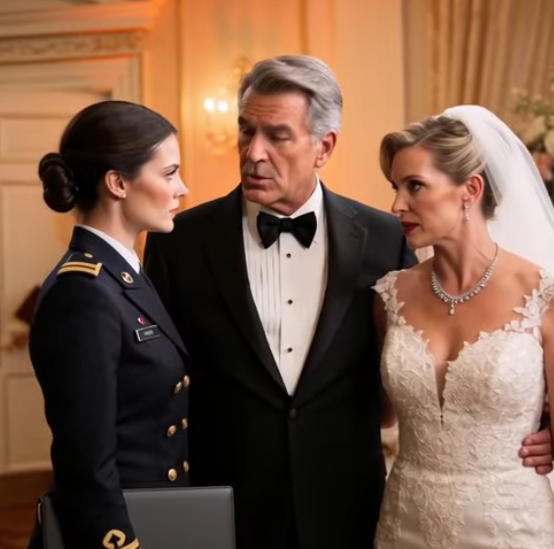
The silence that descended upon the Harborview Belmont ballroom was so absolute it felt pressurized, like the moment before a thunderclap. My father, Walter Bennett, stood frozen under the crystal chandelier, his face a mosaic of mounting bewilderment. He had expected a scene—tears, begging, a public tantrum that would solidify my reputation as the “unstable, black-sheep daughter” to be discarded. Instead, he got my smile.
It was a small, razor-sharp expression, devoid of warmth. I didn’t look like a girl being disowned; I looked like a woman who had just been handed the keys to the kingdom she had spent years quietly undermining.
“Is that all, Father?” I asked, my voice cutting through the heavy air with the precision of a scalpel.
Lauren, my sister, shifted uncomfortably, the pearls on her bodice rattling as she breathed. She reached out to touch Walter’s arm, her practiced sympathy faltering. “Dad? Is she… is she okay? Should we have security escort her?”
“No,” I interjected, standing up slowly. My chair scraped against the polished floor, a harsh sound in the quiet room. “Security won’t be necessary. But I believe the guests might find the contents of this envelope far more entertaining than the wedding vows.”
The Anatomy of a Fall
Walter’s eyes narrowed, his predatory instinct finally kicking in. He stepped closer, his voice dropping to a gravelly, menacing whisper. “Don’t you dare, Clara. You’re out. You’re nothing. Whatever is in that envelope is a gift of severance, not a leverage point. You have no legal standing, no capital, and no allies left in this room.”
“Oh, Father,” I replied, smoothing my dress. “You’ve always been so obsessed with optics that you forgot to check the fine print. You spent your life teaching me that information is the only currency that matters. You just forgot to mention that I was the one you trained to keep the books.”
I walked toward the center of the dance floor. The professional cameras followed my every move, their operators confused but eager to capture the drama. I turned to face the two hundred guests—politicians, CEOs, venture capitalists—people who had spent the last decade currying favor with the Bennett family.
“Ladies and gentlemen,” I began, my voice amplified by the room’s acoustics. “For those who don’t know me, I am Clara Bennett. And today, my father has graciously provided me with a document that formalizes a transition of power. He thinks he is stripping me of my inheritance. He doesn’t realize he is triggering a clause in the family trust that he, in his arrogance, neglected to read.”
I pulled the document from my bag—the same ivory envelope that was supposed to be my death warrant. “This isn’t a disinheritance notice. It is a signed confession of tax evasion, offshore embezzlement, and the illicit acquisition of the very land this hotel is built upon, all notarized and dated by the family’s former CFO—my mentor—three days before he mysteriously ‘retired.'”

The room went deathly silent. The color drained from Walter’s face until he was the color of aged parchment. Lauren gasped, her hand flying to her mouth, her eyes darting to the guests who were now whispering, their phones already out, recording every word.
The Burning of the Bridge
“You see,” I continued, pacing slowly, “Walter always kept two sets of books. One for the IRS, and one for the family. He thought I was the naive daughter who didn’t understand the ‘family business.’ But I spent six years as his assistant. I saw the shell companies in the Cayman Islands. I saw the bribes paid to zoning committees. And today, with the signature he just forced into my hand, he has confirmed his intent to liquidate the assets—which, according to the trust I secretly amended two years ago, now require my counter-signature for any divestment.”
Walter lunged for me, but the sheer shock of his own hubris held him back. He was a titan of industry, but he was a titan of a house built on sand.
“You can’t do this,” he rasped, his face purple with rage. “I will ruin you. I will tie you up in court until you’re destitute.”
“With what money, Father?” I countered. “The accounts are frozen. I initiated the freeze an hour ago, right before I walked into this building. You’re not just disowning me; you’re bankrupting yourself.”
I turned to the guests. “The wedding continues, of course. But I wouldn’t count on the open bar lasting much longer. I believe the authorities are already at the lobby doors. It seems my father’s ‘severance’ document came with a very expensive legal receipt.”
At that moment, the double doors at the back of the ballroom swung open. A team of men in dark suits—federal agents, not wedding security—strode into the room. The chaos was instantaneous. The music cut out, the band stopped playing, and the elite guests scrambled to put as much distance between themselves and the Bennetts as possible.
The Aftermath of Fire
The night that followed was a blur of police sirens, flashing lights, and the screeching of tires. I watched from the balcony of the hotel as they led my father out in handcuffs. He looked smaller than I had ever remembered him—just an old man whose empire had crumbled because he didn’t respect his own creation.
Lauren was hysterical, sobbing into her white silk veil, realizing that the life of luxury she had banked on had evaporated in the span of an hour. She looked up at me as she was being led away by her own legal team, her eyes filled with a terrifying, hollow hatred. She hadn’t realized that the enemy wasn’t me; the enemy was the greed our father had raised us on.
I stayed in the hotel until the sun began to rise over the Atlantic. I sat in the bridal suite, surrounded by the remnants of a wedding that never finished. I felt no joy, only a strange, quiet satisfaction. I hadn’t destroyed them out of malice; I had destroyed them as a defense.
The Reclamation
Six months later, the scandal had largely faded from the headlines, replaced by the next season of corporate drama. The Bennett estate was in receivership, and the legal battles were still ongoing, but I was no longer a player in their game.
I sat in a high-rise office in San Francisco, looking out at the bay. My own firm, built on the liquidated assets of the trust I had reclaimed, was thriving. I wasn’t just a Bennett anymore; I was something entirely my own.
My mother, who had left Walter years before the fallout, came into the office. She looked healthier, younger than I had seen her in decades.
“They’re asking about a settlement,” she said, setting a file on my desk. “Your father wants to talk. He says he has something to offer.”
I didn’t open the file. I slid it back toward her. “Tell him the offer is the same as it was that day in Newport. He can tell the truth, or he can spend the rest of his life in a cell. My empire isn’t built on ivory envelopes anymore. It’s built on transparency.”
“You did the right thing, Clara,” she said softly.
“I did the only thing I could,” I replied.
I turned back to the window. The city lights were beginning to twinkle, reflecting off the water like diamonds. I thought back to the girl who had stood in that ballroom, clutching an ivory envelope and waiting for the end of her world. She had died that day, or perhaps she had just been born.
The kingdom of the Bennetts was nothing but ashes now, a cautionary tale whispered at dinner parties. But from those ashes, I had carved a life that was finally, truly mine—free from the shadows of my father, free from the hollow expectations of my sister, and free from the suffocating weight of a “fairy tale” that was never anything more than a cage.
The sun set, painting the sky in colors of fire and gold. I poured a glass of champagne, took a sip, and toasted the empty room. The war was over. I had won, and more importantly, I had survived. And as I looked toward the horizon, I knew that the future, for the first time in my life, was entirely up to me.
The ivory envelope was gone, but the lesson remained: true power isn’t about what you inherit; it’s about what you’re willing to burn to keep your integrity intact. And I had burned it all to build something real.
The silence that descended upon the Harborview Belmont ballroom was so absolute it felt pressurized, like the moment before a thunderclap. My father, Walter Bennett, stood frozen under the crystal chandelier, his face a mosaic of mounting bewilderment. He had expected a scene—tears, begging, a public tantrum that would solidify my reputation as the “unstable, black-sheep daughter” to be discarded. Instead, he got my smile.
It was a small, razor-sharp expression, devoid of warmth. I didn’t look like a girl being disowned; I looked like a woman who had just been handed the keys to the kingdom she had spent years quietly undermining.
“Is that all, Father?” I asked, my voice cutting through the heavy air with the precision of a scalpel.
Lauren, my sister, shifted uncomfortably, the pearls on her bodice rattling as she breathed. She reached out to touch Walter’s arm, her practiced sympathy faltering. “Dad? Is she… is she okay? Should we have security escort her?”
“No,” I interjected, standing up slowly. My chair scraped against the polished floor, a harsh sound in the quiet room. “Security won’t be necessary. But I believe the guests might find the contents of this envelope far more entertaining than the wedding vows.”
The Anatomy of a Fall
Walter’s eyes narrowed, his predatory instinct finally kicking in. He stepped closer, his voice dropping to a gravelly, menacing whisper. “Don’t you dare, Clara. You’re out. You’re nothing. Whatever is in that envelope is a gift of severance, not a leverage point. You have no legal standing, no capital, and no allies left in this room.”
“Oh, Father,” I replied, smoothing my dress. “You’ve always been so obsessed with optics that you forgot to check the fine print. You spent your life teaching me that information is the only currency that matters. You just forgot to mention that I was the one you trained to keep the books.”
I walked toward the center of the dance floor. The professional cameras followed my every move, their operators confused but eager to capture the drama. I turned to face the two hundred guests—politicians, CEOs, venture capitalists—people who had spent the last decade currying favor with the Bennett family.
“Ladies and gentlemen,” I began, my voice amplified by the room’s acoustics. “For those who don’t know me, I am Clara Bennett. And today, my father has graciously provided me with a document that formalizes a transition of power. He thinks he is stripping me of my inheritance. He doesn’t realize he is triggering a clause in the family trust that he, in his arrogance, neglected to read.”
I pulled the document from my bag—the same ivory envelope that was supposed to be my death warrant. “This isn’t a disinheritance notice. It is a signed confession of tax evasion, offshore embezzlement, and the illicit acquisition of the very land this hotel is built upon, all notarized and dated by the family’s former CFO—my mentor—three days before he mysteriously ‘retired.'”
The room went deathly silent. The color drained from Walter’s face until he was the color of aged parchment. Lauren gasped, her hand flying to her mouth, her eyes darting to the guests who were now whispering, their phones already out, recording every word.
The Burning of the Bridge
“You see,” I continued, pacing slowly, “Walter always kept two sets of books. One for the IRS, and one for the family. He thought I was the naive daughter who didn’t understand the ‘family business.’ But I spent six years as his assistant. I saw the shell companies in the Cayman Islands. I saw the bribes paid to zoning committees. And today, with the signature he just forced into my hand, he has confirmed his intent to liquidate the assets—which, according to the trust I secretly amended two years ago, now require my counter-signature for any divestment.”
Walter lunged for me, but the sheer shock of his own hubris held him back. He was a titan of industry, but he was a titan of a house built on sand.
“You can’t do this,” he rasped, his face purple with rage. “I will ruin you. I will tie you up in court until you’re destitute.”
“With what money, Father?” I countered. “The accounts are frozen. I initiated the freeze an hour ago, right before I walked into this building. You’re not just disowning me; you’re bankrupting yourself.”
I turned to the guests. “The wedding continues, of course. But I wouldn’t count on the open bar lasting much longer. I believe the authorities are already at the lobby doors. It seems my father’s ‘severance’ document came with a very expensive legal receipt.”
At that moment, the double doors at the back of the ballroom swung open. A team of men in dark suits—federal agents, not wedding security—strode into the room. The chaos was instantaneous. The music cut out, the band stopped playing, and the elite guests scrambled to put as much distance between themselves and the Bennetts as possible.
The Aftermath of Fire
The night that followed was a blur of police sirens, flashing lights, and the screeching of tires. I watched from the balcony of the hotel as they led my father out in handcuffs. He looked smaller than I had ever remembered him—just an old man whose empire had crumbled because he didn’t respect his own creation.
Lauren was hysterical, sobbing into her white silk veil, realizing that the life of luxury she had banked on had evaporated in the span of an hour. She looked up at me as she was being led away by her own legal team, her eyes filled with a terrifying, hollow hatred. She hadn’t realized that the enemy wasn’t me; the enemy was the greed our father had raised us on.
I stayed in the hotel until the sun began to rise over the Atlantic. I sat in the bridal suite, surrounded by the remnants of a wedding that never finished. I felt no joy, only a strange, quiet satisfaction. I hadn’t destroyed them out of malice; I had destroyed them as a defense.
The Reclamation
Six months later, the scandal had largely faded from the headlines, replaced by the next season of corporate drama. The Bennett estate was in receivership, and the legal battles were still ongoing, but I was no longer a player in their game.
I sat in a high-rise office in San Francisco, looking out at the bay. My own firm, built on the liquidated assets of the trust I had reclaimed, was thriving. I wasn’t just a Bennett anymore; I was something entirely my own.
My mother, who had left Walter years before the fallout, came into the office. She looked healthier, younger than I had seen her in decades.
“They’re asking about a settlement,” she said, setting a file on my desk. “Your father wants to talk. He says he has something to offer.”
I didn’t open the file. I slid it back toward her. “Tell him the offer is the same as it was that day in Newport. He can tell the truth, or he can spend the rest of his life in a cell. My empire isn’t built on ivory envelopes anymore. It’s built on transparency.”
“You did the right thing, Clara,” she said softly.
“I did the only thing I could,” I replied.
I turned back to the window. The city lights were beginning to twinkle, reflecting off the water like diamonds. I thought back to the girl who had stood in that ballroom, clutching an ivory envelope and waiting for the end of her world. She had died that day, or perhaps she had just been born.
The kingdom of the Bennetts was nothing but ashes now, a cautionary tale whispered at dinner parties. But from those ashes, I had carved a life that was finally, truly mine—free from the shadows of my father, free from the hollow expectations of my sister, and free from the suffocating weight of a “fairy tale” that was never anything more than a cage.
The sun set, painting the sky in colors of fire and gold. I poured a glass of champagne, took a sip, and toasted the empty room. The war was over. I had won, and more importantly, I had survived. And as I looked toward the horizon, I knew that the future, for the first time in my life, was entirely up to me.
The ivory envelope was gone, but the lesson remained: true power isn’t about what you inherit; it’s about what you’re willing to burn to keep your integrity intact. And I had burned it all to build something real.