The Fortress of Truth: How I Reclaimed My Life from a Predator
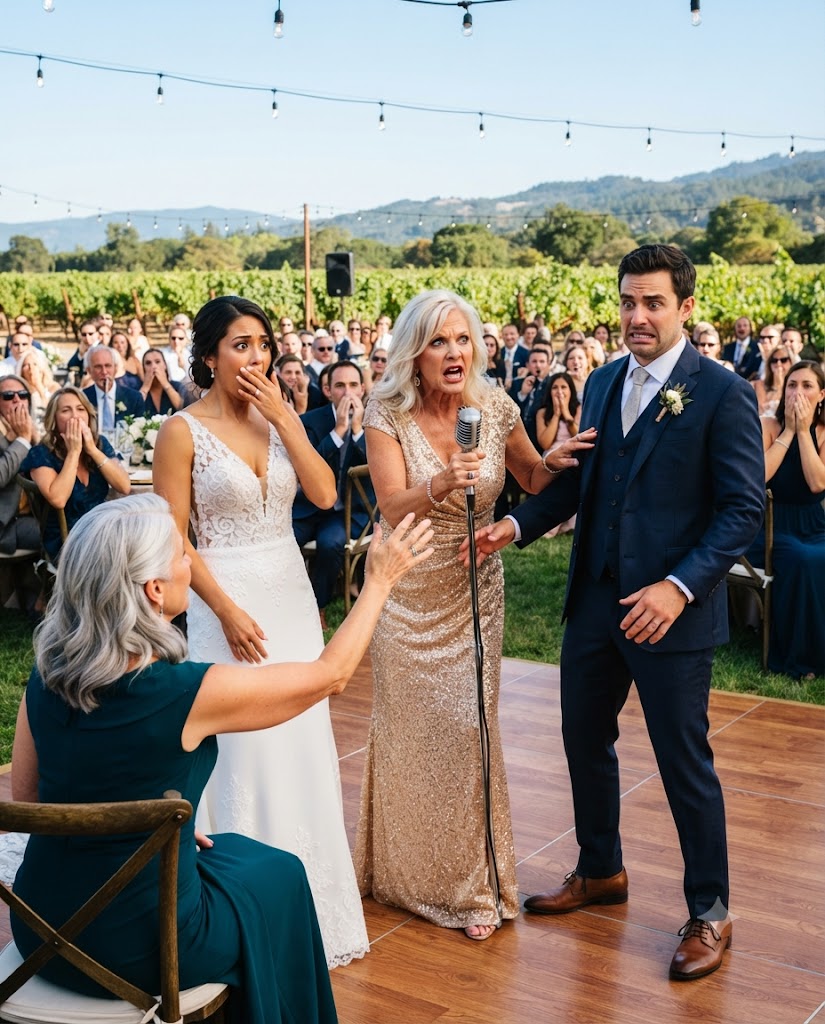
The silence that descended upon the ballroom was so absolute it felt pressurized, like the moment before a thunderclap. My mother stood under the spotlight, her posture elegant and unyielding, clutching the microphone with a grip that suggested she was ready to go to war.
Mark’s hand had fallen from my waist as if he’d been burned. He stood beside me, his face a mask of practiced indifference that was rapidly crumbling into a pale, frantic shade of panic. The air in the Napa Valley vineyard, usually thick with the scent of expensive roses and champagne, now carried the metallic tang of betrayal.
“My daughter,” my mother began, her voice ringing out, clear as a bell and cold as a winter morning in the Sierras, “has indeed been incredibly generous throughout this wedding planning. However, I’m afraid Eleanor has been misinformed by her son. You see, the Pacific Heights property—a sanctuary my daughter built with her own two hands and her own sweat—is currently held in a blind trust. And as of last week, the sole legal beneficiary of that trust is not Chloe, nor is it the happy couple. It is me.”
A collective gasp rippled through the 200 guests. Mark’s eyes darted to me, then back to my mother, his composure completely shattered.
“And,” my mother continued, her gaze locking onto Eleanor’s face, which had turned a blotchy, furious shade of crimson, “since I am the sole owner, I can tell you right now, Eleanor: you are not welcome in that apartment. Not for a day. Not for an hour. Not for a minute.”
The Unraveling of a Masterpiece
The fallout was instantaneous. The air in the ballroom seemed to charge with static electricity. Mark leaned into my ear, his voice no longer a hiss, but a desperate, low-pitched snarl. “Chloe, tell her to stop. You’re making a scene. We’ll fix this, we’ll talk about the deed later, just get her to stop.”
I looked at him—really looked at him. The man I had worshipped, the man I had built a life around, was reduced to a frightened boy worried about his mother’s ego and a lost payday. The “perfect” guy had been an actor, and his performance had just ended.
I took a step away from him. It was a small movement, but it felt like stepping off a cliff. “There is no ‘later,’ Mark,” I said, my voice surprisingly steady. “And there is no ‘we.'”
I turned my back on him. The guests were murmuring, cameras were flashing, but the chaos didn’t matter. For the first time in three years, I wasn’t performing for him. I was free. I scanned the room. Friends I had known for years looked horrified, while others were already pulling out their phones to document the implosion of the “Wedding of the Century.” I didn’t care.
The Great Escape
I walked toward my mother. As I crossed the dance floor, I felt the heavy weight of the diamond ring on my finger. It had been his grandmother’s, he’d claimed. In reality, it was likely just another piece of inventory in his grand scheme.
I reached my mother, who didn’t wait for the applause or the judgment. She simply grabbed my hand and led me toward the exit. We walked past the stunned bridesmaids, past the caterers who had stopped mid-pour, and out into the cool, crisp Napa air.
“Drive,” my mother commanded as we reached her car.
We didn’t head back to the hotel. We drove in silence for miles until we were safely back in the city. When we finally reached my apartment, the sanctuary I had fought so hard for, I collapsed on the floor. The adrenaline left my body, replaced by a hollow, aching grief.
“I’m sorry,” I sobbed. “I thought I knew him. I really thought he loved me.”
My mother sat beside me, smoothing my hair. “You were blinded by a version of him that never existed, Chloe. That’s not a failure on your part. That’s the nature of a predator. They study you until they know exactly what you want to see, and then they become it.”
“How did you know?” I asked, looking up at her. “How long have you known?”
“I started noticing the cracks months ago,” she explained. “The way he’d steer conversations toward your finances. The way he made you feel small so you’d look to him for validation. Then, last month, I saw him at a gala. He didn’t know I was watching. He was talking to his business partner, bragging about how ‘soon’ he’d have control over the Pacific Heights asset. He didn’t see you as a wife, Chloe. He saw you as an acquisition.”
The Legal War
The days that followed were a blur of legal battles and social wreckage. Mark didn’t go quietly. He tried to claim the transfer of the deed was under duress, that I had been manipulated by my mother. He sent legal threats, tried to contact my office, and even showed up at my building once, begging for a “reconciliation” that was really just a thinly veiled attempt to get his hands on the keys.
But my mother had been thorough. The trust was ironclad. She had hired a forensic accountant to trace his movements, and it turned out he had significant gambling debts and a history of similar “entanglements” with other women who possessed significant assets.
The public shaming was the final nail in his coffin. The story of the “Microphone Meltdown” made headlines in the social columns. The truth about his debts and his character came out in the subsequent divorce proceedings—or rather, the annulment proceedings.
Eleanor, meanwhile, was socially ruined. Having publicly announced her “right” to my home, she became the laughingstock of her high-society circles. She retreated into a bitter seclusion, her influence evaporated. The very people who had envied our union were now the ones gossiping about the “con artist and his mother.”
The Reclamation of Self
Six months later, I stood on the balcony of my Pacific Heights condo, overlooking the shimmering San Francisco Bay. The morning fog was lifting, revealing the Golden Gate Bridge in all its glory.
My life looked different now. It was quieter, less “perfect” in the way Mark had demanded, but it was authentic. I had stopped working the 80-hour weeks. I had learned to value my time, my health, and my own intuition.
My mother joined me on the balcony, carrying two cups of coffee. She looked at me, a soft, knowing smile on her face.
“You’re doing better,” she said.
“I am,” I replied. “I finally feel like I own this place. Not just the deed, but the memories. I’m reclaiming it.”
“You know,” she said, looking out at the water, “you were always strong enough to survive this, Chloe. You just needed to realize that the most dangerous person is often the one holding your hand.”
I nodded. I thought about the girl who had walked down that aisle in Napa, so eager to please, so desperate to be loved. I felt a wave of compassion for her. She had been a victim of a master manipulator, but she had also been the catalyst for her own salvation.
The nightmare was over, but the lesson remained. I had learned that my value was not tied to what I could provide for others, nor was my life defined by a marriage contract or a husband’s approval. My life was mine. The fortress I had built was no longer just a house—it was a testament to my survival.
A New Horizon
I began to pivot my career, moving away from the high-pressure corporate grind that had left me vulnerable to someone like Mark. I started a consultancy firm focused on helping women manage their own assets and build financial independence. I realized that my story wasn’t just a cautionary tale; it was a blueprint for empowerment.
I found joy in the small things again: long brunches with my mother, quiet evenings on my terrace, and the freedom to spend my money on things that actually brought me happiness rather than trying to buy the approval of a man who saw me as a bank account.
As the sun hit the bay, turning the water into liquid gold, I took a sip of my coffee and breathed in the cool, salt-tinged air. For the first time in a very long time, I didn’t feel like I was waiting for the other shoe to drop. I was simply living.
I looked at the phone on the table. It buzzed with an email from my attorney regarding the finalization of the asset protection protocols for my new firm. I smiled, deleted the old photos of Mark from my cloud storage, and turned back to the view.
The city was vast, the future was unwritten, and for the first time, I was the one holding the pen. I wasn’t just surviving; I was thriving. The predator had been cast out, the fortress was secured, and my life—my true, independent life—was finally just beginning.
The experience taught you that trust should be earned, not blindly given. Now that you have reclaimed your autonomy and your life, what is the next project or goal you are planning to focus on to further solidify your independence?